
Why does ozdikenosis kill you? This question sparks curiosity, concern, and confusion—especially because the term itself is not widely recognized in mainstream medical literature. Whether you’ve encountered it in online discussions, fiction, or speculative health content, understanding the potential meaning behind ozdikenosis is essential to separating fact from fiction.
In this article, we’ll explore what ozdikenosis might represent, how such a condition could theoretically affect the body, and why it could be fatal. By examining comparable real-world diseases and biological mechanisms, we’ll break down the possible reasons behind its deadly nature. This deep dive will give you clarity, insight, and a grounded understanding of how severe illnesses can lead to life-threatening outcomes.
What Is Ozdikenosis? A Closer Look at the Term
The first challenge in answering why does ozdikenosis kill you is understanding what ozdikenosis actually is. As of now, there is no officially recognized disease by this name in medical databases such as the WHO or CDC. This suggests that ozdikenosis may be a fictional condition, a misspelling, or a term emerging from niche communities or creative writing.
However, analyzing the structure of the word provides clues. The suffix “-osis” is commonly used in medicine to describe a pathological condition or disease process. Examples include fibrosis, cirrhosis, and psychosis. This implies that ozdikenosis, if it were real, would likely describe a chronic or progressive condition affecting the body in a harmful way.
In many cases, unfamiliar disease names circulate online due to misinformation or creative storytelling. Despite this, exploring hypothetical scenarios helps us understand how real diseases function and why certain conditions become fatal.
How Severe Diseases Lead to Death
To understand why does ozdikenosis kill you, it’s helpful to examine how real diseases cause death. Most life-threatening conditions follow a few common biological pathways that disrupt the body’s ability to function.
One major cause is organ failure. Diseases that damage vital organs—such as the heart, lungs, liver, or kidneys—can lead to a cascade of complications. For example, if the lungs fail, oxygen cannot reach the bloodstream, causing suffocation at a cellular level. If the heart stops pumping effectively, blood circulation collapses, leading to systemic failure.
Another critical factor is systemic inflammation. Many severe illnesses trigger an overactive immune response, sometimes referred to as a cytokine storm. This excessive reaction can damage healthy tissues, disrupt organ function, and ultimately lead to death. If ozdikenosis were a real condition, it could involve similar mechanisms, making it deadly through widespread physiological disruption.
Potential Symptoms and Progression of Ozdikenosis
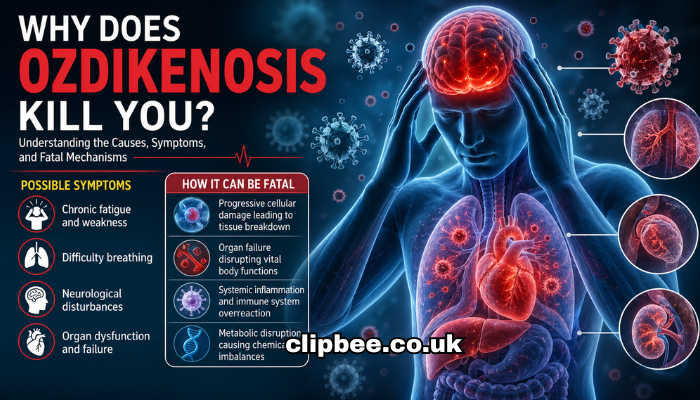
If we imagine ozdikenosis as a real disease, its symptoms would likely follow a progressive pattern. Early signs might include fatigue, weakness, or mild discomfort—symptoms that are easy to overlook but often signal underlying problems.
As the condition advances, more severe symptoms could emerge. These might include difficulty breathing, chronic pain, neurological disturbances, or abnormal organ function. The progression from mild to severe symptoms is common in many diseases, particularly those that go undiagnosed or untreated.
In its final stages, ozdikenosis could theoretically lead to critical complications such as respiratory failure, cardiac arrest, or multi-organ dysfunction. These outcomes are typical of advanced diseases that overwhelm the body’s ability to maintain balance, ultimately explaining why such a condition could be fatal.
Why Does Ozdikenosis Kill You? Breaking Down the Fatal Mechanisms
Now we arrive at the core question: why does ozdikenosis kill you Based on general medical principles, several mechanisms could explain its lethality.
First, progressive cellular damage plays a key role. Many fatal diseases destroy cells faster than the body can repair them. This leads to tissue breakdown and loss of function in critical systems. If ozdikenosis involves such damage, it could gradually incapacitate essential organs.
Second, metabolic disruption is another possible cause. The body relies on precise chemical balances to survive. When these processes are disrupted—whether through toxins, infections, or genetic defects—the result can be catastrophic. Imbalances in electrolytes, hormones, or energy production can quickly become life-threatening.
Finally, lack of treatment or understanding significantly increases the risk of death. Rare or unknown conditions often go undiagnosed, meaning patients may not receive timely care. If ozdikenosis falls into this category, its fatal nature could stem not only from the disease itself but also from the absence of effective medical intervention.
The Role of Diagnosis and Medical Intervention
Understanding why does ozdikenosis kill you also involves considering the importance of diagnosis. Early detection is one of the most critical factors in preventing fatal outcomes. Many diseases that were once deadly are now manageable thanks to advances in medical science.
Without proper diagnosis, a condition like ozdikenosis could progress unchecked. Symptoms might be misinterpreted or ignored, allowing the disease to reach an advanced stage before treatment begins. This delay can significantly reduce survival chances.
Medical intervention, including medication, surgery, or supportive care, often determines whether a patient recovers or deteriorates. If ozdikenosis lacks established treatments, its mortality rate would likely be high. This highlights the importance of research, awareness, and access to healthcare in combating life-threatening conditions.
Conclusion
So, why does ozdikenosis kill you? While the term itself is not recognized in established medical science, exploring its implications reveals valuable insights into how diseases become fatal. Whether through organ failure, systemic inflammation, metabolic disruption, or delayed diagnosis, the pathways to death are often complex and interconnected.
Understanding these mechanisms not only answers the question but also emphasizes the importance of medical knowledge and early intervention. Even if ozdikenosis is fictional or misunderstood, the lessons it provides about health, disease progression, and survival are very real.
FAQs
1. What is ozdikenosis?
Ozdikenosis is not a recognized medical condition and may be fictional or a misinterpreted term.
2. Why does ozdikenosis kill you?
It could theoretically kill through organ failure, systemic damage, or untreated progression, similar to real diseases.
3. Is ozdikenosis a real disease?
No official medical sources confirm its existence.
4. What symptoms are associated with ozdikenosis?
Hypothetically, symptoms could include fatigue, pain, breathing issues, and organ dysfunction.
5. Can ozdikenosis be treated?
Since it is not a recognized condition, there are no established treatments.
6. How do diseases typically become fatal?
They often cause organ failure, disrupt bodily systems, or trigger severe immune responses.
7. Could ozdikenosis be a rare disease?
It’s possible, but there is no scientific evidence supporting this.
8. Why is early diagnosis important?
Early detection allows for timely treatment, which can prevent complications and death.
9. What should you do if you encounter unknown medical terms?
Consult reliable medical sources or healthcare professionals for accurate information.
10. Is ozdikenosis dangerous?
If it were real, it could be dangerous depending on its effects, but currently, it lacks medical validation.
